Puto
Putong Bigas
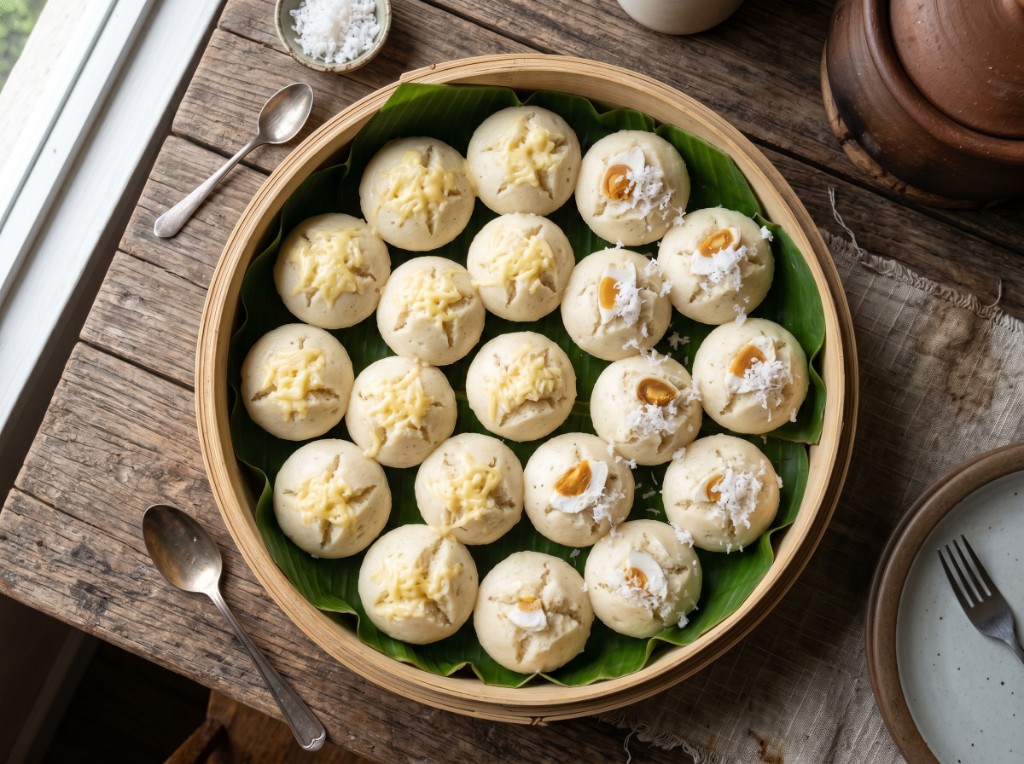
Steamed puto in a bamboo steamer—fluffy rice cakes with cheese, salted egg, and niyog toppings (Puto Biñan style).
Serves 18 · 40m total
The Story
Puto is everyday merienda and fiesta kakanin—small, steamed rice cakes that should look snowy white with cracked domed tops. Made from galapong or fine rice flour, puto is one of the oldest steamed rice breads in Filipino cooking.
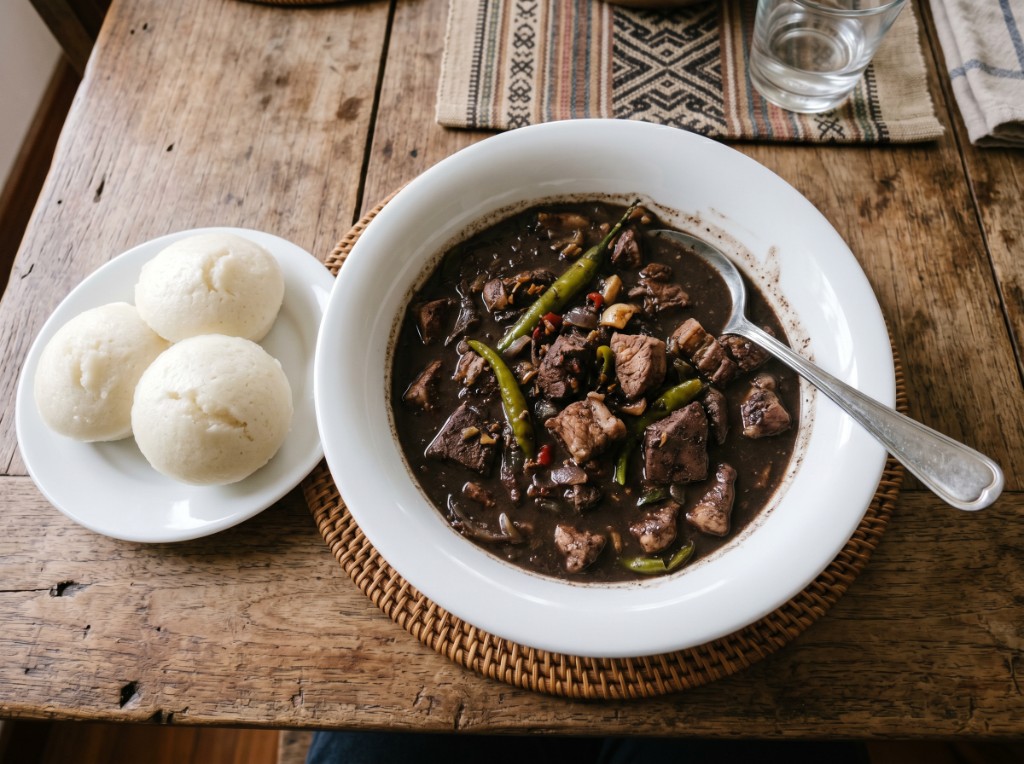
Plain puto pairs with dinuguan at Sunday breakfast—the soft cake soaking dark gravy is a classic Kapampangan and Tagalog pairing. Dressed puto with cheese, salted egg, or fresh coconut turned the humble cake into party food.
From bamboo steamers lined with banana leaf to metal pans in backyard kitchens, the technique stayed: steam until domed, never brown the tops. Puto proves that Filipino celebration food often comes from the simplest staple—rice, transformed.
Lola's Tips
- ✦Fill molds only three-quarters—puto rises high and can stick to the lid.
- ✦Mix cheese and salted-egg batches in one steamer like the photo for a party platter.
- ✦Coconut milk in the batter (instead of cow's milk) gives a subtle tropical sweetness.
Substitutions
- coconut milk → fresh milk or water (less aroma, still works)
- salted duck egg → cheese-only topping, or skip for plain puto
- cheddar → Eden or quick-melt cheese common in the Philippines
Ingredients
placeholder
placeholder
placeholder
placeholder
placeholder
placeholder
Instructions
- 1
Start your steamer water on high so it is at a rolling boil before batter goes in. Cut banana leaves to fit a bamboo steamer or muffin molds; briefly pass leaves over flame until pliable, then line the steamer—the leaf adds aroma like the photo.
- 2
Whisk rice flour, all-purpose flour, sugar, baking powder, and salt in a large bowl.
- 3
Beat eggs with coconut milk (or milk) and vanilla if using. Pour wet into dry and fold until smooth—small lumps are fine. Stir in vinegar if using for extra lift. Batter should be thick but pourable.
- 4
Fill molds or paper cups about three-quarters full and arrange in the lined steamer. For the Biñan-style platter in the photo: top half with grated cheese, the other half with a thin slice of salted egg plus a pinch of grated coconut.
- 5
Cover and steam on high 15–18 minutes without lifting the lid. Puto is done when tops are domed with fine cracks, springy to touch, and a toothpick comes out clean.
- 6
Turn off heat; rest covered 2 minutes. Remove puto carefully—they are fragile while hot.
- 7
Serve warm from the steamer for merienda, or with dinuguan for scooping. Best eaten the same day.
- 8
To reheat: steam again 5 minutes or microwave 15 seconds wrapped in a damp towel.
Kitchen Timer · 20 min prep first
20:00
Tried this recipe?
Questions, corrections, or a photo of your Puto? We read every message—no comment section, just a direct line to the kitchen.