Dinuguan
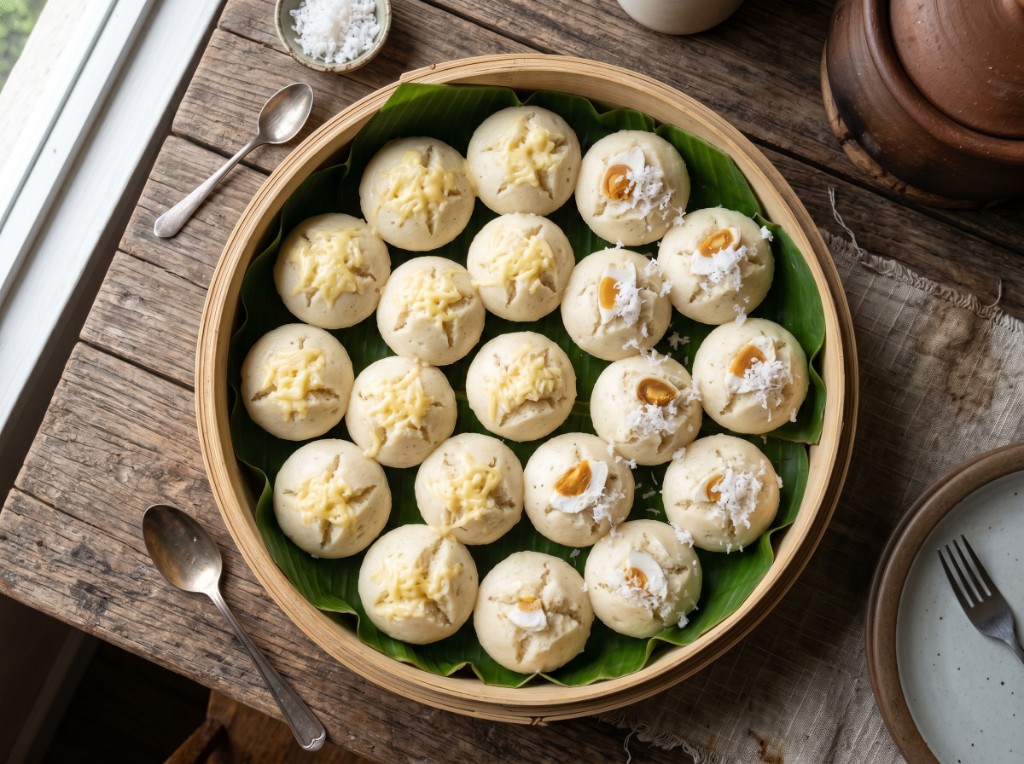
Dinuguan at Puto
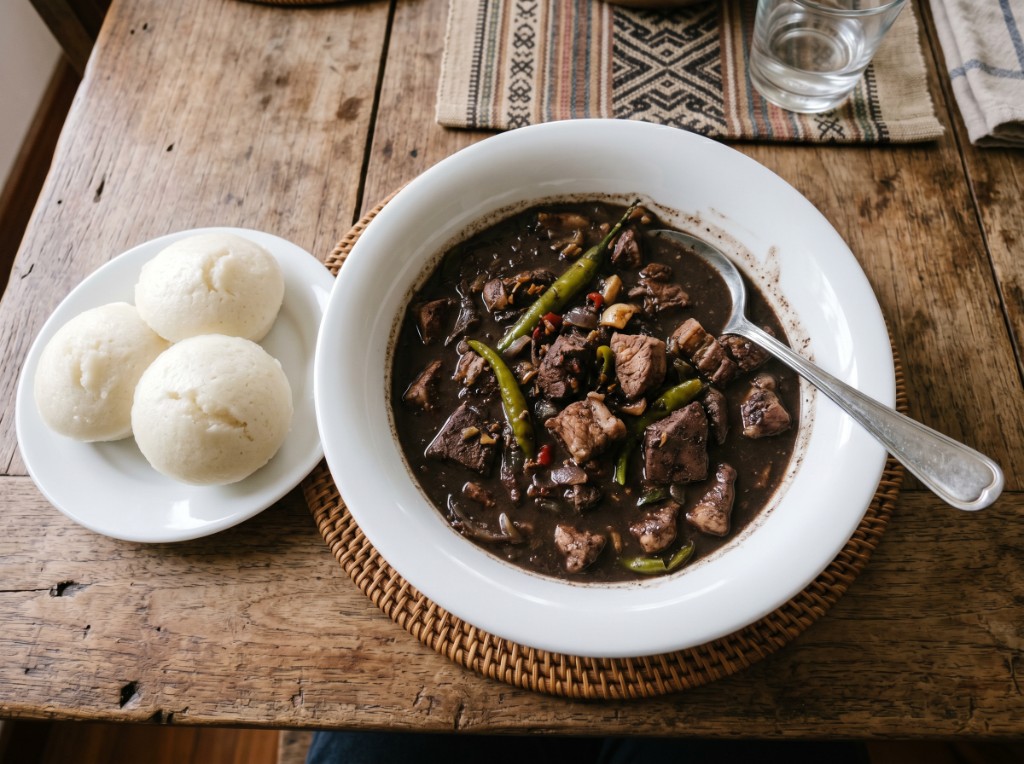
Ilocano pork blood stew with pork belly, liver, siling haba, and vinegar—thick, glossy, and meant for scooping with puto.
Serves 6 · 1h total
The Story
Kids call it chocolate meat until they learn the secret. Dinuguan is pork stew thickened with fresh blood—the name from <em>dugo</em>, blood—a dish that uses every part of the pig after slaughter, nothing wasted.
Ilocos, Pampanga, and Visayan versions differ in thickness, sourness, and whether chili or vinegar leads. Some add bitok-bitok (pig intestines); others keep it to lean pork and ear. What they share is the deep, iron-rich gravy that demands puto or rice to balance.
Dinuguan stayed in home kitchens because blood is perishable and the stew must be cooked fresh. It is Sunday comfort and fiesta ulam in provinces that never flinched at nose-to-tail cooking—honest food from a culture that respects the whole animal.
Lola's Tips
- ✦—refrigerate and cook same day; frozen blood changes texture.
- ✦If the stew is too thick, thin with a little hot water; if thin, simmer uncovered to reduce.
- ✦Tastes better the next day—reheat gently and make a fresh batch of puto to serve.
Substitutions
- pork blood → no true substitute—order from butcher same day
Ingredients
placeholder
placeholder
placeholder
placeholder
placeholder
placeholder
Instructions
- 1
Rinse pork blood through a fine sieve into a bowl to remove clots; set aside. Pat pork belly (and liver if using) dry—this helps browning.
- 2
Heat oil in a wide pot over medium-high heat. Sauté garlic, onion, and ginger until fragrant. Add pork belly; cook until lightly browned, 6–8 minutes. Add liver last 2 minutes if using.
- 3
Pour in vinegar—do not stir yet. Let it boil uncovered 2–3 minutes so the harsh acid cooks off (same idea as adobo).
- 4
Lower heat to medium. Stir in pork blood gradually while stirring constantly. Add water, bay leaves, and half the siling haba. Simmer gently (do not hard-boil) 20–25 minutes, stirring occasionally, until thick and glossy.
- 5
Season with fish sauce. Taste—it should be savory, tangy, and peppery; add a splash more vinegar if too rich.
- 6
Add remaining siling haba and siling labuyo if using. Simmer 3 minutes more. The stew should coat a spoon and look deep brown-black like the photo.
- 7
Serve hot with puto on the side—break puto and scoop stew, or spoon over plain rice.
Kitchen Timer · 20 min prep first
40:00
Tried this recipe?
Questions, corrections, or a photo of your Dinuguan? We read every message—no comment section, just a direct line to the kitchen.