Bulalo
Bulalo ng Batangas
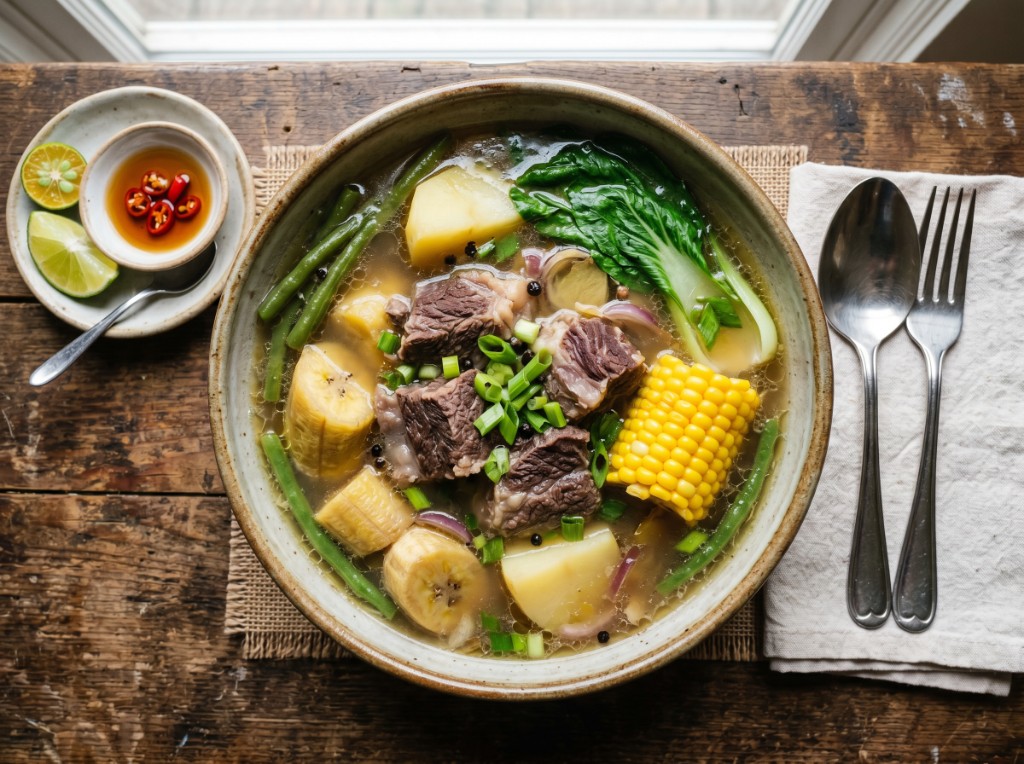
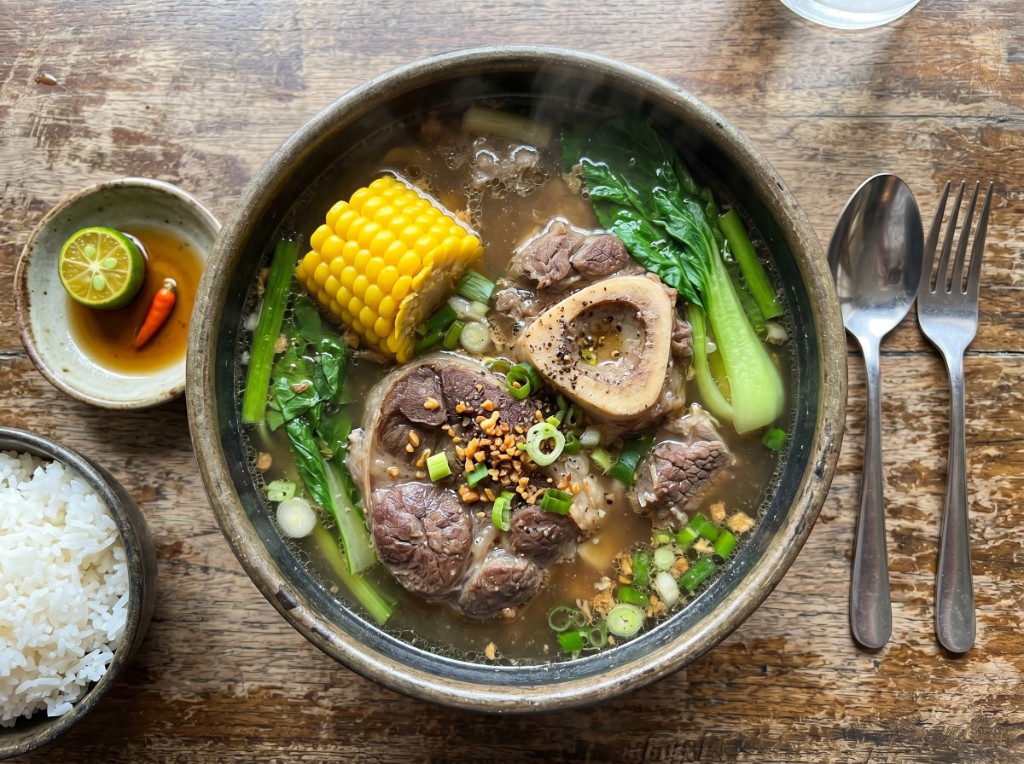
Batangas bulalo—cross-cut marrow bone and shank in rich broth with corn, pechay, and fried garlic; scoop marrow with...
Serves 6 · 3h 30m total
The Story
Batangas is cattle country—bulalo shops line the highways south of Manila, steam rising from tall pots. Bulalo is beef shank and marrow bone boiled for hours until the collagen melts into the broth and the marrow softens inside the bone.
The dish is regional by geography: where cattle are raised, the bones are cheap and plentiful. Batangueños turned slow-simmered shank into a destination meal—travelers stop specifically for bulalo before reaching Tagaytay or the beaches south.
Marrow scooped onto rice with a narrow spoon is the ritual every bulalo fan knows. Clear broth, minimal seasoning, patis and calamansi at the table—the opposite of heavily sauced ulam. Bulalo became one of the Philippines' most famous soups by staying stubbornly simple.
Best paired with
Steamed rice, patis with calamansi and siling labuyo, marrow scooped on rice
Use it in these KusinaPH recipes
Lola's Tips
- ✦Beef shank with marrow (buto-buto) is non-negotiable—without it you have beef soup, not bulalo.
- ✦Simmer gently; a rolling boil clouds the broth.
- ✦Scoop marrow with a small spoon, spread on hot rice with patis—eat while the pot is still steaming.
Substitutions
- beef shank with marrow → oxtail sections (richer, different texture)
- fried garlic → crispy garlic from oil, or quick-fry thin garlic slices
Ingredients
placeholder
placeholder
placeholder
placeholder
placeholder
placeholder
Instructions
- 1
Ask the butcher for cross-cut beef shank with marrow (buto-buto)—the round bone with marrow in the center is the star, like your photo. Rinse bones and meat; optional quick blanch: boil 5 minutes, drain, and rinse for a cleaner broth.
- 2
In a tall stock pot, cover bones and meat with water by about 8 cm (3 inches). Add red onion, garlic, and peppercorns. Bring to a boil, then immediately lower to a gentle simmer—never a hard rolling boil or the broth turns cloudy.
- 3
Skim gray scum for the first 30 minutes. Simmer partly covered 2½ to 3 hours until meat pulls easily from the bone and marrow looks soft and buttery. Add hot water only if bones are exposed.
- 4
Season with fish sauce (patis) and salt if needed—the broth should taste rich and savory, not overly salty (sawsawan adds more at the table).
- 5
Add corn halves; simmer 10–12 minutes until tender. Add pechay (and cabbage if using); cook 2–3 minutes until leaves wilt and stalks stay green.
- 6
Ladle into deep bowls: place one marrow bone per person, add meat chunks, corn, and pechay. Sprinkle fried garlic and green onions on top. Dust cracked pepper over the exposed marrow.
- 7
At the table, scoop marrow with a small spoon or knife tip—spread on hot rice with a dip of patis and calamansi. Serve steaming broth with rice and sawsawan (patis, calamansi, siling labuyo) on the side.
Kitchen Timer · 25 min prep first
185:00
Tried this recipe?
Questions, corrections, or a photo of your Bulalo? We read every message—no comment section, just a direct line to the kitchen.