Beef Nilaga
Nilagang Baka
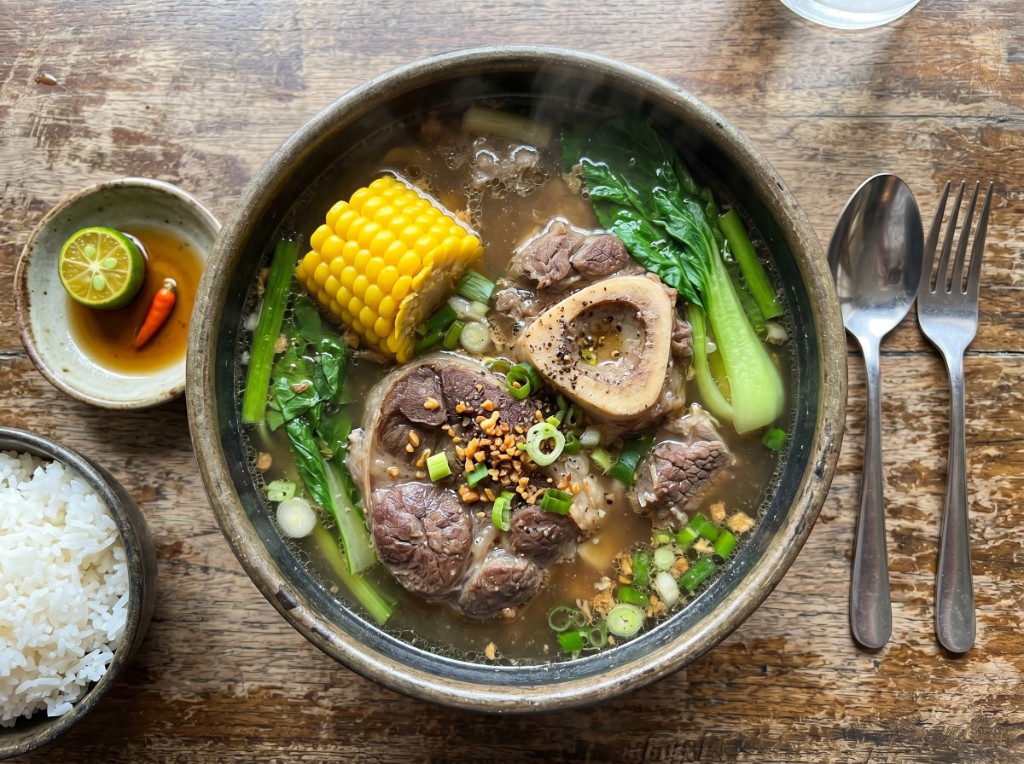
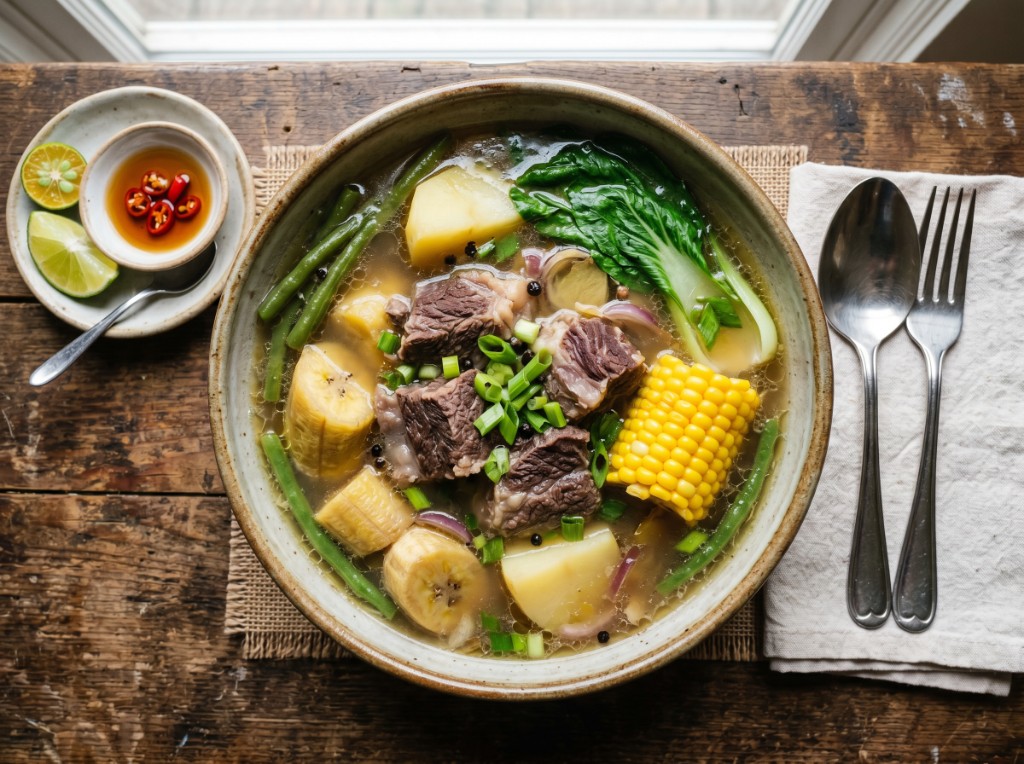
Sunday nilagang baka—clear beef broth with brisket, saba, corn, potatoes, green beans, and pechay; patis sawsawan...
Serves 6 · 2h total
The Story
Nilaga means boiled—the Sunday lunch that fills the house with steam and patis. Nilagang baka is one of the oldest comfort soups in Tagalog cooking: beef simmered in plain water until tender, vegetables added in stages, broth served clear and golden.
Unlike the marrow-focused bulalo of Batangas, nilaga spread as everyday Luzon food—what lolas put on when relatives visit and nobody wants anything fancy. The philosophy is simple: let the beef and bones speak, season only at the table with patis and calamansi.
Over time the vegetable set became standard—saba, corn, potato, green beans, pechay—each household guarding its own order of adding. Nilaga stays a benchmark of Filipino home cooking: honest beef soup that rewards patience more than technique.
Best paired with
Steamed rice, patis with calamansi and siling labuyo (sawsawan), and extra calamansi on the table
Use it in these KusinaPH recipes
Lola's Tips
- ✦Brisket or bone-in shank gives the best flavor for long simmering—ask the butcher for nilaga cut.
- ✦Do not skip skimming—clear broth is the point.
- ✦Pile the bowl like the photo: meat on top, vegetables around, broth ladled over.
Substitutions
- beef brisket → shank, short ribs, or trimmed ribs (see beef guide)
- saba → plantain or skip for a lighter soup
- pechay → bok choy, Napa cabbage, or extra repolyo
Ingredients
placeholder
placeholder
placeholder
placeholder
placeholder
placeholder
Instructions
- 1
Cut beef into large, even chunks (about 5 cm / 2 inches)—big pieces stay tender like the photo. Optional: cover with cold water, boil 5 minutes, drain and rinse to start a clearer broth.
- 2
In a large pot, add beef, red onion, garlic, peppercorns, and water to cover by about 5 cm (2 inches). Bring to a boil over high heat, then reduce to a gentle simmer. Skim gray scum from the surface for the first 15–20 minutes.
- 3
Simmer uncovered or partly covered 1 to 1¼ hours until beef is fork-tender but not falling apart. Add water if the level drops below the meat.
- 4
Season with fish sauce (patis) and salt if needed—the broth should taste mildly savory, not salty yet (sawsawan adds salt at the table).
- 5
Add potatoes, saba banana, and corn. Simmer 12–15 minutes until potatoes are tender and saba is soft but still holds shape.
- 6
Add green beans; cook 6–8 minutes until bright green and tender-crisp. Stir in pechay (and cabbage if using); cook 2–3 minutes until leaves wilt and stalks stay crisp.
- 7
Ladle into deep bowls with meat, broth, and vegetables piled high. Top with green onions and a few whole peppercorns. Serve with steamed rice and sawsawan: patis with calamansi, lime wedge, and sliced siling labuyo on the side, like the photo.
Kitchen Timer · 25 min prep first
95:00
Tried this recipe?
Questions, corrections, or a photo of your Beef Nilaga? We read every message—no comment section, just a direct line to the kitchen.