Kare-Kare
Kare-Kareng Buntot
Kapampangan peanut stew with oxtail, honeycomb tripe, kalabasa, and achuete-orange sauce—served with bagoong and...
Serves 8 · 2h 50m total
The Story
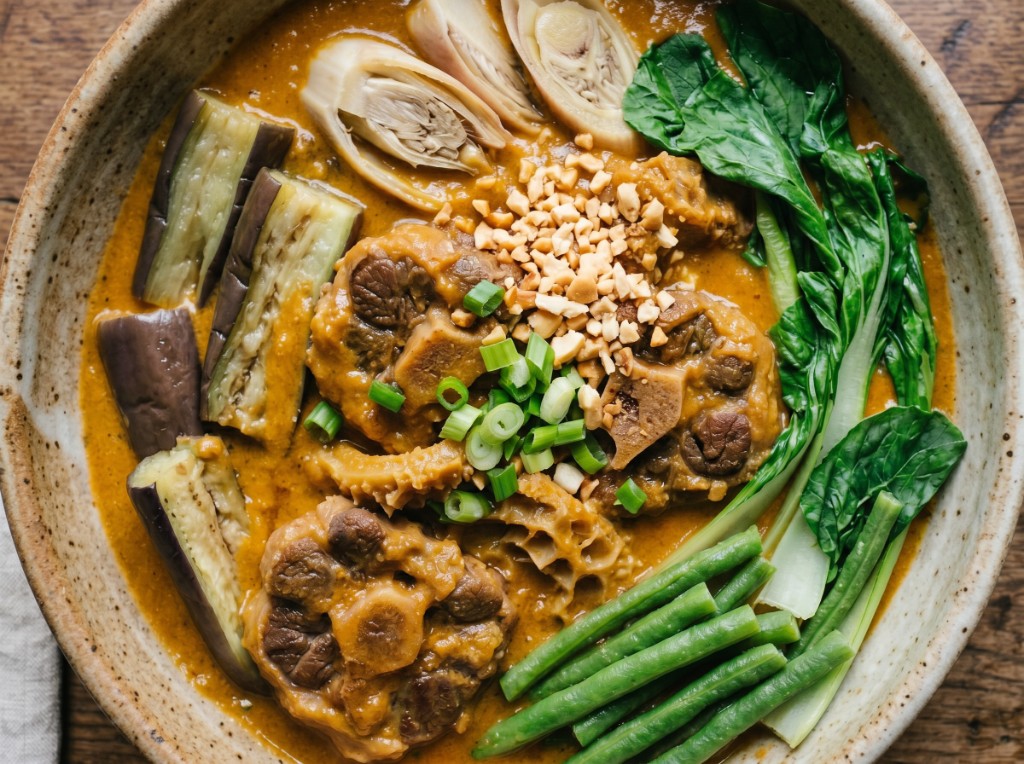
Kare-kare is Pampanga’s showpiece stew—peanut sauce tinted orange with achuete (annatto), loaded with oxtail, tripe, and vegetables arranged like a fiesta platter. It is intentionally mild and nutty; the salty punch comes from bagoong you add bite by bite, not from the stew itself.
Best paired with
Sautéed shrimp paste (bagoong alamang) and lots of steamed rice
Lola's Tips
- ✦peanut butter (peanuts and salt only). Avoid sugary brands—they make the sauce cloying. Blend with ground roasted peanuts for a more traditional nutty finish.
- ✦Achuete oil is what gives kare-kare its sunset orange—not the peanut butter alone. Warm the oil with annatto seeds, strain, and stir in at the end of simmering.
- ✦Cook kalabasa, eggplant, sitaw, pechay, and banana blossom separately so they stay bright—arrange on top for presentation.
- ✦Clean well with salt and vinegar; undercooked tripe ruins the dish. It should be soft, not rubbery.
- ✦stays on the side—sauté with garlic and a little sugar before serving. Never stir it into the stew.
Substitutions
- peanut butter → ¾ cup ground roasted peanuts + extra broth, blended smooth
- annatto oil → 2 tbsp achuete seeds warmed in ¼ cup vegetable oil, strained
- kalabasa → extra eggplant or kamote (sweet potato) cubes
- banana blossom → canned hearts of palm, drained, or extra sitaw
Ingredients
placeholder
placeholder
placeholder
placeholder
placeholder
placeholder
Instructions
- 1
Clean tripe: rub with salt and vinegar, rinse well. Simmer with ginger and enough water to cover 1–1½ hours until tender, or pressure-cook 25 minutes. Drain and slice into strips. (Skip if using oxtail only.)
- 2
Pressure-cook oxtail with onion, half the garlic, and a pinch of salt in 4 cups water until fall-off-the-bone tender, about 45–50 minutes. Reserve the rich broth.
- 3
Toast glutinous rice in a dry pan until golden, then grind to a fine powder—this thickens the sauce without flour.
- 4
Warm annatto (achuete) oil in the pot until the sauce will take on a deep orange-yellow color—that is the classic kare-kare look.
- 5
Sauté remaining onion and garlic. Add 6 cups broth (top up with water if needed). Whisk in peanut butter and ground peanuts until smooth. Stir in annatto oil, ground rice, and fish sauce. Simmer 15 minutes.
- 6
Add oxtail and tripe. Simmer gently 20–25 minutes until the sauce coats the back of a spoon and tastes nutty, not chalky—add more peanut butter 1 tbsp at a time if needed.
- 7
Cook vegetables separately so they stay bright: boil kalabasa and eggplant until just tender; blanch sitaw, pechay, and banana blossom 1–2 minutes. Drain.
- 8
Arrange meat in a bowl, ladle sauce over, and place vegetables around the top. Sprinkle crushed peanuts and green onions.
- 9
Serve with steamed rice and sautéed bagoong on the side—dip each bite; do not stir bagoong into the stew.
Kitchen Timer · 45 min prep first
125:00
Tried this recipe?
Questions, corrections, or a photo of your Kare-Kare? We read every message—no comment section, just a direct line to the kitchen.