Filipino food guide
Pancit Canton vs Bihon vs Palabok
Quick answer: Pancit canton uses thick egg noodles stir-fried with soy and vegetables. Pancit bihon uses thin rice noodles that are light and savory. Pancit palabok uses rice noodles with orange shrimp sauce, tinapa, chicharon, and eggs—usually for bigger celebrations.
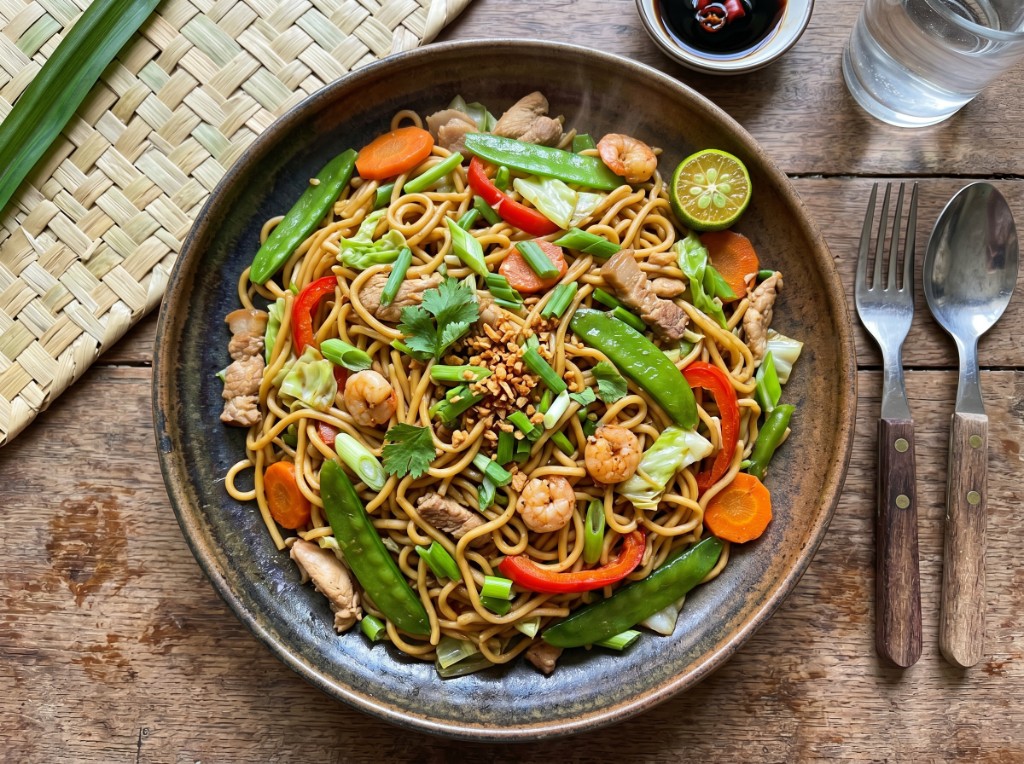
Pancit Canton
Canton noodles are wheat egg noodles, similar to lo mein. The dish is stir-fried, slightly saucy, and common at birthdays because noodles symbolize long life.
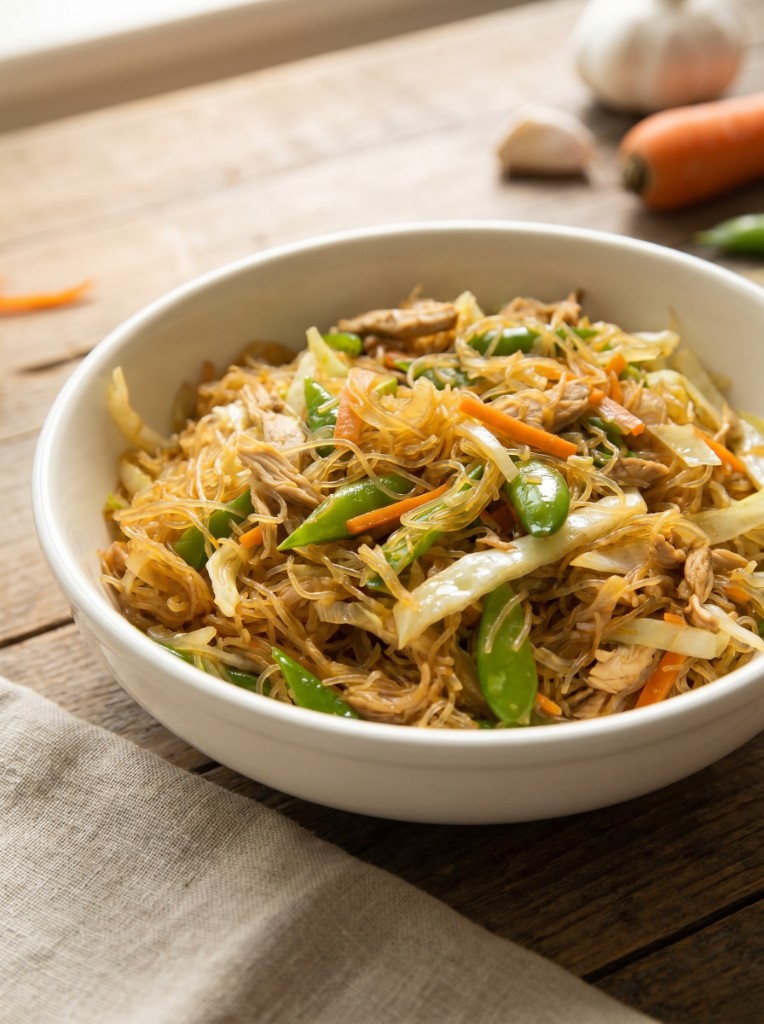
Pancit Bihon
Bihon is thin rice noodle, lighter than canton. It cooks fast and absorbs broth or soy seasoning well. Many families prefer it for everyday handaan because it feeds a crowd cheaply.
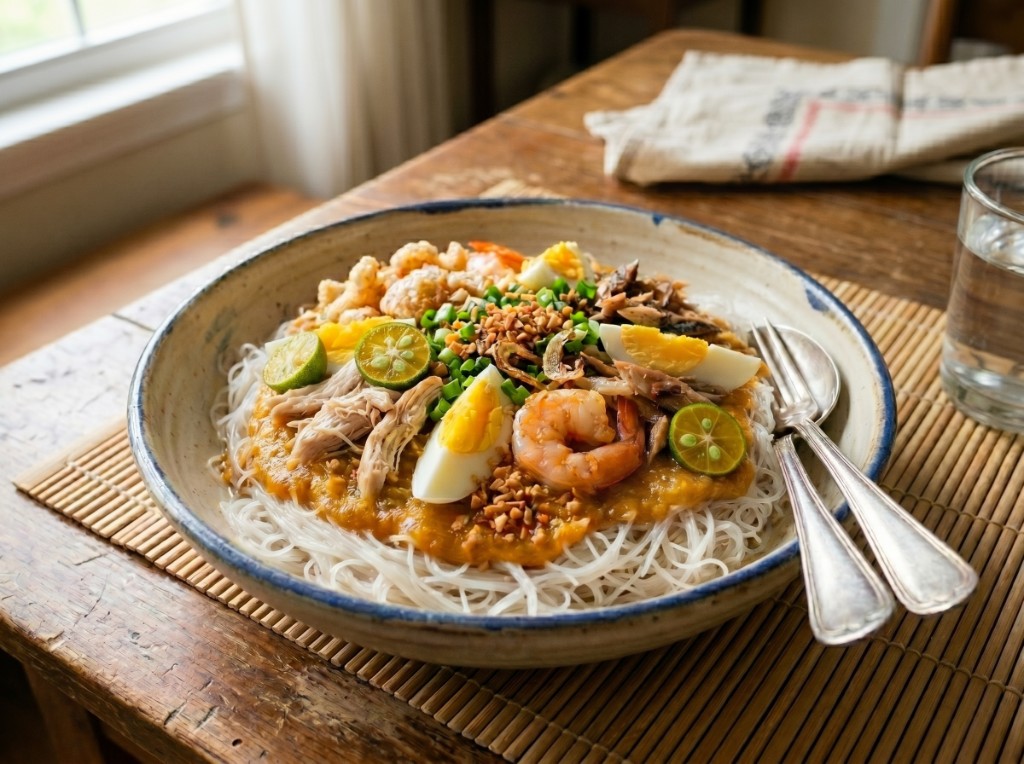
Pancit Palabok
Palabok is not stir-fried the same way. Rice noodles are topped with a thick shrimp-based sauce, then finished with tinapa flakes, crushed chicharon, boiled eggs, and green onion. It is festive and saucier.
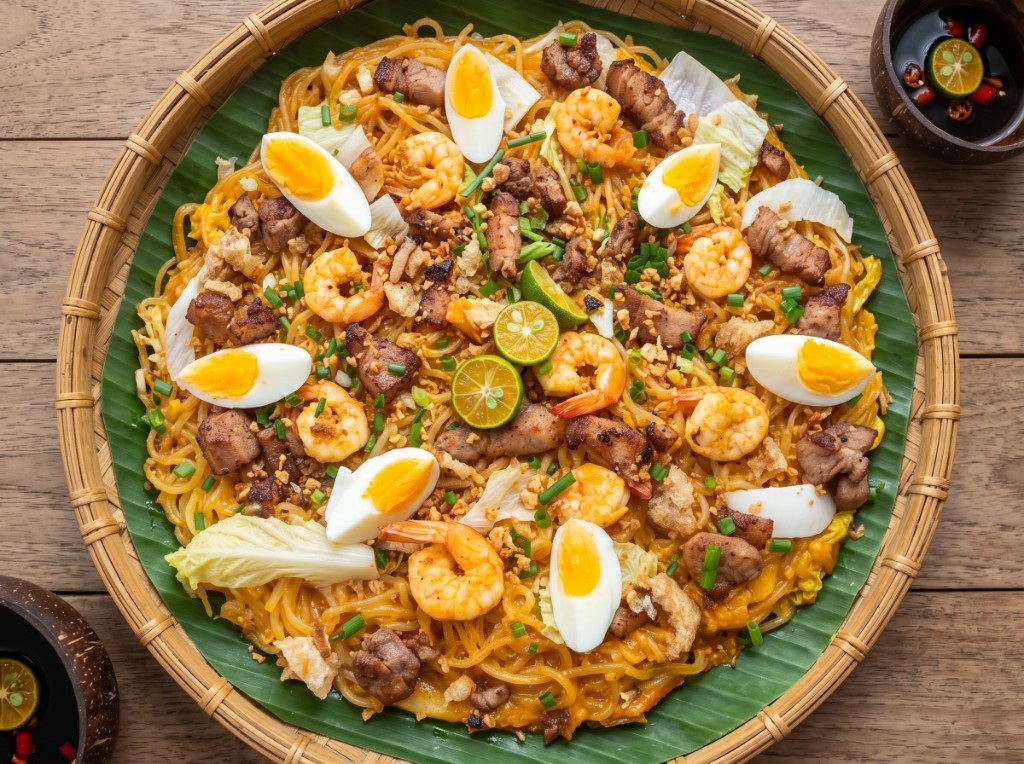
Pancit Malabon
Malabon uses thick rice noodles tossed through a rich shrimp sauce with smoked fish and chicharon—saucier and heavier than bihon, and strongly tied to Metro Manila handaan bilao service.
Party Planning Tip
For a simple birthday, canton or bihon is easier to cook in one wok. For a bigger fiesta spread, palabok can be a centerpiece noodle dish while canton or bihon fills the table as a second noodle option.
Recipes Mentioned
FAQ
Which pancit is best for beginners?
Pancit bihon is usually the easiest because the noodles cook quickly and forgive timing better than thick canton.
Is palabok the same as luglog?
They are related party noodles with similar sauces, but palabok and luglog styles vary by region and family recipe.
Why serve pancit at birthdays?
Noodles represent long life in Filipino celebration culture, so pancit is considered essential at many handaan tables.