Filipino food guide
Filipino Adobo Styles
Quick answer: Adobo is vinegar-braised meat seasoned with garlic, pepper, and often soy sauce, but Filipino cooks adjust the balance everywhere. Some versions are saucy, some are dry, some add coconut milk, and some skip soy for a lighter white adobo.
Classic Soy-Vinegar Adobo
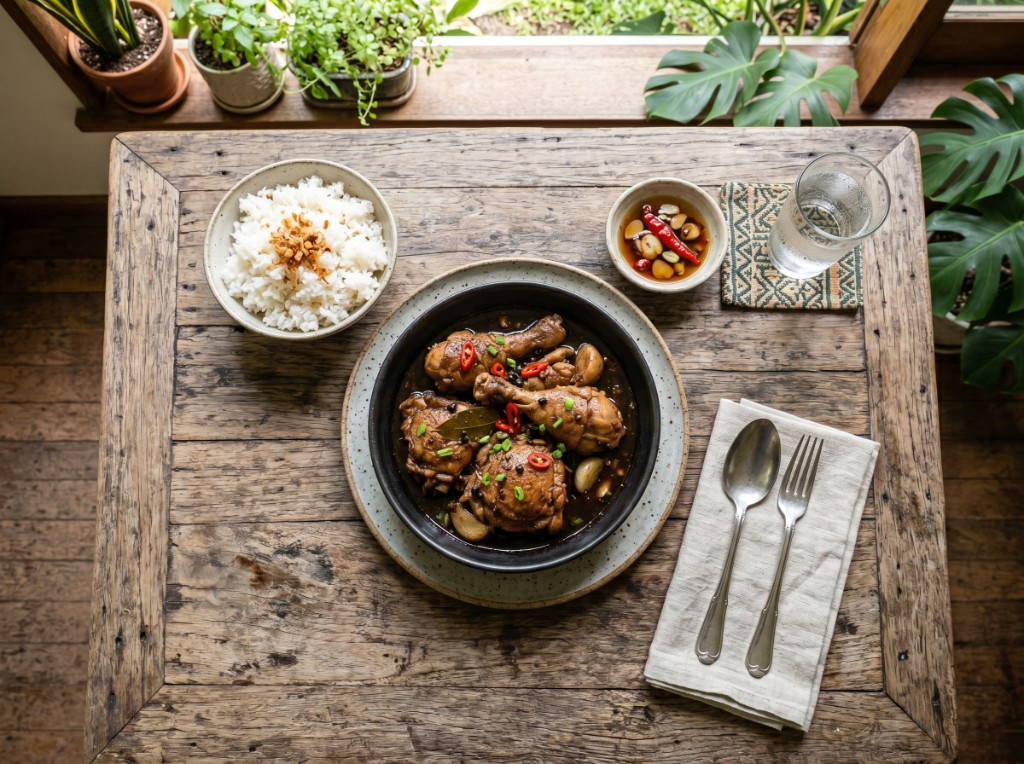
This is the version most people recognize: chicken or pork simmered in soy sauce, vinegar, garlic, bay leaf, and pepper until the sauce reduces and the meat turns glossy.
White Adobo (Adobong Puti)
White adobo leans on vinegar, garlic, and pepper without soy sauce. The flavor is sharper and lighter in color, common in some Visayan and home-style recipes.
Dry and Crispy Adobo
Some cooks reduce the sauce until it clings to the meat, then fry the pieces so the edges crisp. This style is popular for rice plates and packed lunches.
Adobo with Coconut Milk
Adding gata softens the acidity and makes the sauce richer. It is common in Southern Luzon and Bicol-influenced kitchens, especially for chicken or pork.
Recipes Mentioned
FAQ
Should I stir adobo right after adding vinegar?
Let vinegar boil uncovered briefly first so the harsh acid mellows, then simmer gently.
Is adobo better the next day?
Many families think so—the flavors settle and the meat tastes deeper after resting overnight.
Chicken or pork adobo for beginners?
Chicken is forgiving and cooks faster. Pork shoulder gives richer adobo if you have more time.