Mechado
Mechadong Baka
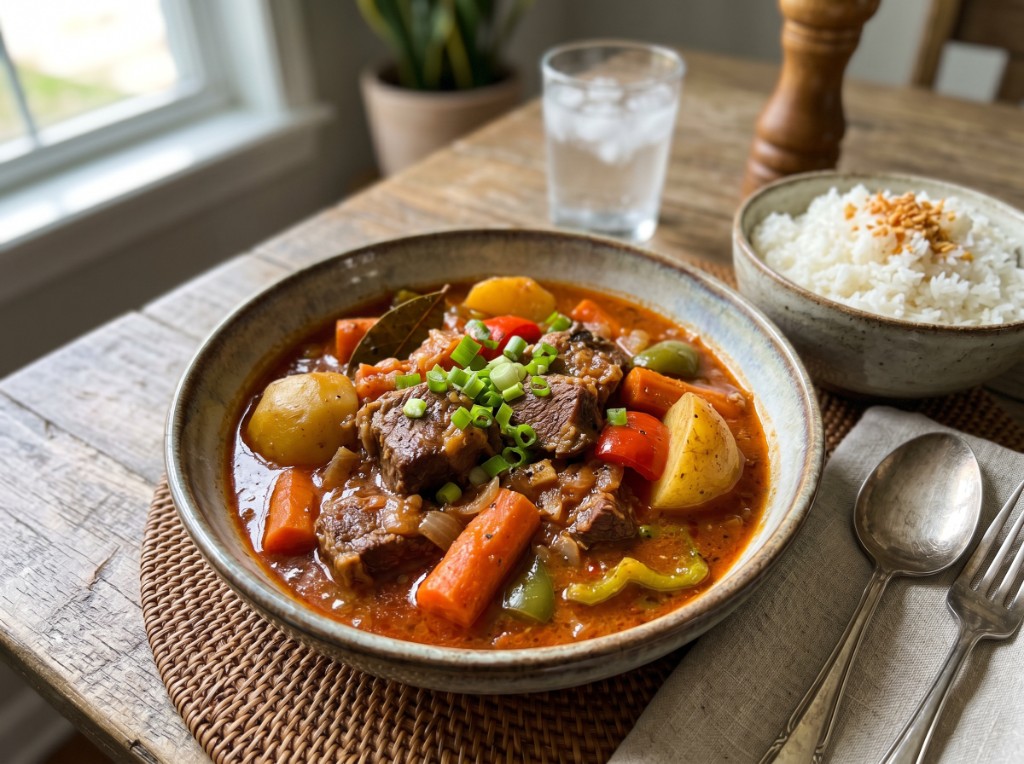
Mechadong baka—large seared beef chunks in thick glossy tomato-soy sauce with potato, carrot, and bell pepper; bay leaf simmered in, finished with fresh...
Serves 6 · 2h 10m total
The Story
The bowl in the photo is what Filipino mechado should look like: big pieces of beef that were seared first so they stay chunky and brown, a sauce that is thick and glossy tomato-red—not thin like soup—and vegetables you can see clearly: potato, carrot, bell pepper, and soft onion under a crown of fresh green onions.
Mechado (mechadong baka) is a tomato-soy beef stew from Luzon party cooking. The old name comes from larding beef with pork fat so it stays moist; most home cooks today skip the needle and rely on a good sear, a long simmer, and a sauce reduced until it coats the meat.
How it differs from its cousins on the same table: Caldereta is richer and often has liver spread, cheese, or olives and a deeper, almost spicy tomato-gata profile. Afritada is lighter and soupier, usually with chicken or pork and smaller cuts. Menudo is a dice game—small cubes, raisins, garbanzos, and hotdog in a thinner sauce. Mechado is the beef stew with large cuts, soy depth, calamansi brightness, and a sauce thick enough to shine on the spoon—exactly like the photo.
Best paired with
Steaming white rice topped with fried garlic, atchara, and calamansi on the side.
Use it in these KusinaPH recipes
Lola's Tips
- ✦Mechado vs caldereta: Caldereta often uses liver spread, cheese, olives, or gata and tastes deeper and spicier. Mechado is straight tomato-soy beef with large cuts—no cheese cap on top.
- ✦Mechado vs afritada: Afritada is soupier, usually chicken or pork, with smaller pieces. Mechado is beef-forward with a thicker, reduced sauce.
- ✦Mechado vs menudo: Menudo uses small diced pork (and sometimes liver), raisins, garbanzos, and hotdog. Mechado uses big beef chunks and no chickpeas.
- ✦Mechado vs nilaga: Nilaga is clear broth for soup; mechado is a tomato stew meant to coat rice.
- ✦For the photo look: sear beef well, use tomato paste, and simmer uncovered at the end so the sauce turns shiny and thick.
- ✦Cut potato and carrot large and add after beef is tender so they do not fall apart.
- ✦Bell pepper and onion go in last—they should look soft but still colorful in the bowl.
- ✦Fresh green onions on top at serving time; do not simmer them away.
- ✦Mechado tastes better the next day; skim fat when reheating and add a fresh sprinkle of green onion.
- ✦Chuck or brisket only—lean stew cuts will dry out even with a long simmer.
Substitutions
- beef chuck → beef brisket or short ribs, boneless
- calamansi juice → lemon juice
- tomato paste → extra 3 tbsp tomato sauce, reduced longer
- carrots → extra potato only
Ingredients
placeholder
placeholder
placeholder
placeholder
placeholder
placeholder
Instructions
- 1
Pat beef dry; season with salt and pepper. Heat oil in a wide heavy pot and sear beef in batches until deep brown on all sides—do not crowd the pan. Set beef aside (browning is what gives the photo its color).
- 2
In the same pot, sauté onion and garlic until soft and fragrant. Stir in tomato paste 1 minute until it darkens slightly.
- 3
Return beef with tomato sauce, soy sauce, calamansi, broth, and bay leaves. Bring to a boil, then cover and simmer low 1–1½ hours until beef is fork-tender, stirring occasionally.
- 4
Add potato and carrot; simmer covered 15–20 minutes until just tender but still holding shape like the photo.
- 5
Add red and green bell pepper and onion wedges; simmer uncovered 10–15 minutes, stirring gently, until peppers soften and the sauce reduces to a thick, glossy coat on the meat—add a splash of water only if it sticks before beef is done.
- 6
Taste; adjust with patis, pepper, or a little more calamansi. Leave bay leaves visible or remove before serving.
- 7
Ladle into a wide bowl. Top with a generous pile of chopped green onions. Serve with rice and fried garlic on the side.
Kitchen Timer · 30 min prep first
100:00
Tried this recipe?
Questions, corrections, or a photo of your Mechado? We read every message—no comment section, just a direct line to the kitchen.