Laing
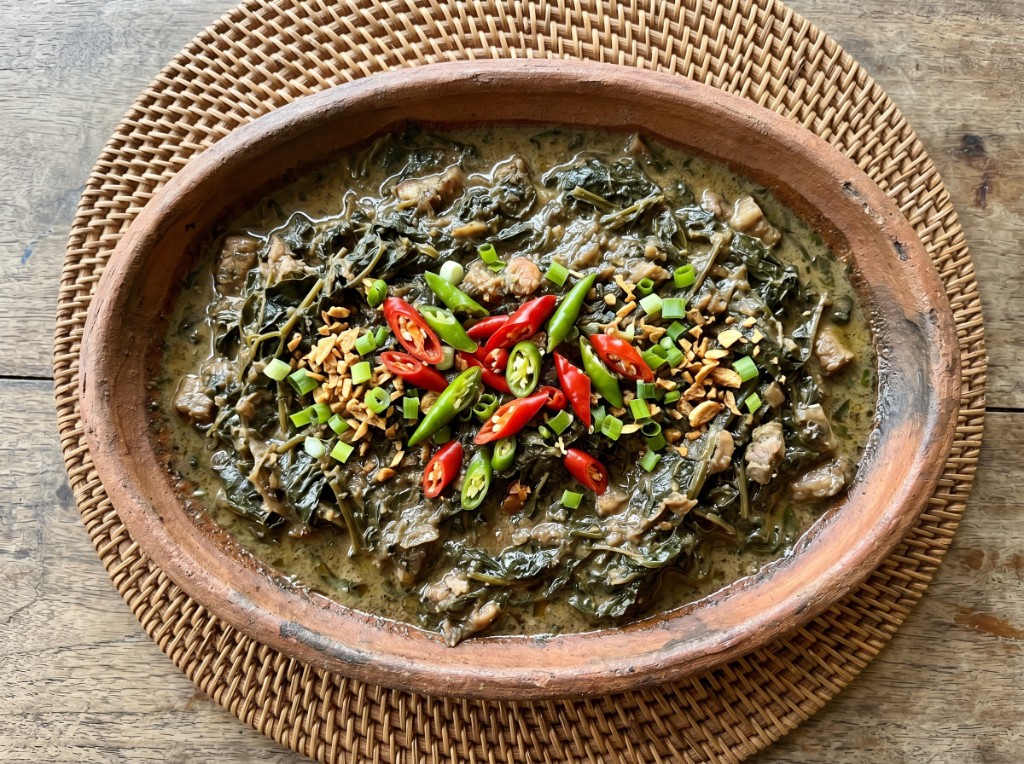
Laing (Ginataang Dahon ng Gabi)
Slow-cooked dried taro leaves in coconut milk with pork, bagoong, and chili—rich, creamy, and unmistakably Bicolano.
Serves 4 · 1h 10m total
The Story
Laing comes from the Bicol region, where coconut and chili define the table. It is ginataang dahon ng gabi—dried taro leaves cooked in gata—not the saucy pork dish many call 'Bicol Express' (that is a separate recipe). Home cooks in Camarines Sur and Albay traditionally layer leaves in a palayok and let coconut milk seep down without stirring, so the leaves stay intact while the sauce thickens. When the coconut oil rises to the surface (nangangalay), the laing is ready. Optional dried dilis (anchovies) add a subtle sea-salt depth that Bicolanos have used for generations to round out the coconut.
Best paired with
Steamed white rice, grilled tilapia, or boiled saba banana on the side
Lola's Tips
- ✦Do not stir once the leaves are in—the technique is gentle pressing so gata flows down without shredding the leaves.
- ✦Separate thick coconut cream (kakang gata) from the first can for sautéing; use thinner milk for simmering on top.
- ✦Optional dilis: toast in a dry pan until crisp, crush lightly, and sprinkle between layers for umami without fishiness.
- ✦Bagoong goes in early with the first milk so the leaves season from within, not just on the surface.
- ✦When red oil pools on top and the sauce coats a spoon, the laing is done—low heat prevents the gata from splitting.
- ✦Rest 10 minutes off heat; laing thickens further and tastes better the next day.
Substitutions
- dried taro leaves → frozen shredded taro leaves (thawed and drained)
- siling labuyo → Thai bird's eye chili—use fewer pieces
- dilis → 1 tbsp bagoong alamang only, if you skip anchovies
Ingredients
placeholder
placeholder
placeholder
placeholder
placeholder
placeholder
Instructions
- 1
Open coconut milk without shaking the cans. Spoon the thick cream from the top of one can into a wide pot—this is kakang gata. Reserve the thinner milk from both cans in a bowl.
- 2
Optional dilis: toast dried anchovies in a dry pan over medium heat until crisp and fragrant. Crush lightly and set aside.
- 3
Sauté pork belly in the kakang gata until edges brown. Add garlic, onion, and ginger. Cook until aromatic. Stir in bagoong and cook 1 minute.
- 4
Add half the taro leaves, pressing gently with the back of a spoon—do not stir. Scatter half the crushed dilis (if using). Add remaining leaves and dilis. Pour reserved thin coconut milk over the leaves, then tuck chilies into the top layer.
- 5
Bring to a gentle bubble, then simmer uncovered on low 40–50 minutes. Press the leaves down occasionally so they submerge, but never stir. The sauce will thicken and coconut oil will rise to the surface.
- 6
Taste—the leaves should be tender, the sauce creamy and spicy-salty. Adjust heat with more chili if needed. Rest 10 minutes off heat.
- 7
Top with toasted garlic and green onions. Serve with plenty of steamed rice.
Kitchen Timer · 20 min prep first
50:00
Tried this recipe?
Questions, corrections, or a photo of your Laing? We read every message—no comment section, just a direct line to the kitchen.