Kinilaw na Tanigue
Kinilaw
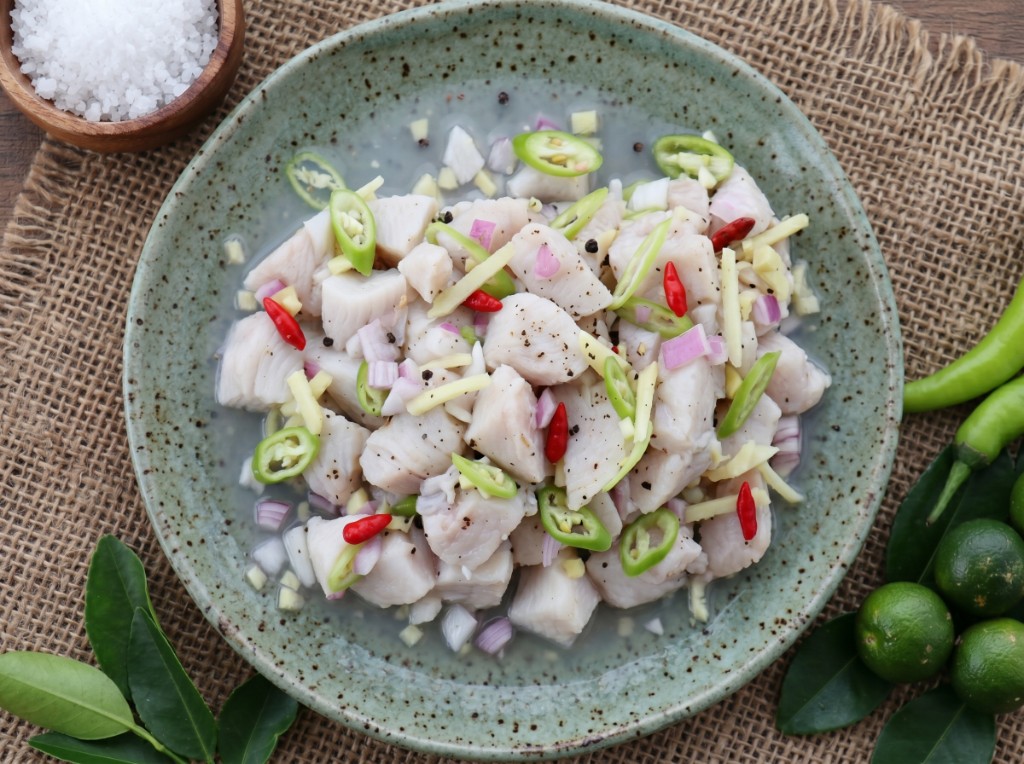
Cebuano kinilaw—fresh fish cubes cured in vinegar and calamansi with ginger, red onion, siling haba, and...
Serves 4 · 25m total
The Story
Kinilaw predates Spanish influence—Visayans were curing fish with vinegar and citrus long before ceviche went global. Raw fish "cooked" in acid is one of the archipelago's oldest cooking ideas, tied to coastal fishing communities from Cebu to Mindanao.
The name comes from <em>kilaw</em>, to eat something raw or lightly prepared. Ginger tames fishiness, coconut vinegar or native citrus provides the cure, chili and onion add bite. No fire—just time and sharp flavor.
Kinilaw varies by catch: tanigue, malasugue, dilis, even seaweed in some provinces. It remains the dish Filipinos point to when arguing that local cuisine did not begin with colonization—it began with what the sea gave and what acid could transform.
Best paired with
Ice-cold beer, grilled corn, and puso (hanging rice)
Lola's Tips
- ✦—buy from a trusted suki; chill bowl and fish until assembly.
- ✦Cure just until opaque—12–20 minutes for tanigue; tuna and salmon need less time.
- ✦Add coconut cream last so it does not curdle with strong acid.
Substitutions
- tanigue → tuna, malasugi, or snapper (see fish guide above)
- coconut vinegar → palm vinegar, cane vinegar, or white vinegar + lime
Ingredients
placeholder
placeholder
placeholder
placeholder
placeholder
placeholder
Instructions
- 1
Use only sashimi-grade fish bought the same day. Pat fillets dry, remove skin and bloodline, then cut into even 1.5 cm (about ½-inch) cubes—uniform size cures evenly like the photo.
- 2
Optional salt rub: toss fish with half the salt, rest 3 minutes, drain any liquid. This firms the flesh slightly.
- 3
In a glass or ceramic bowl (not metal), combine vinegar, calamansi juice, remaining salt, ginger, red onion, siling haba, siling labuyo, garlic if using, and cracked pepper. Taste—it should be sharply sour and salty; adjust vinegar or calamansi to balance.
- 4
Add fish cubes. Toss gently 30 seconds so every piece is coated—do not mash.
- 5
Cover and refrigerate 12–20 minutes, tossing once halfway, until fish turns opaque on the outside but stays tender inside. Over-marinating makes kinilaw mushy.
- 6
Drain excess liquid if very wet, or serve with a little sauce in the bowl like the photo. Stir in coconut cream just before serving if using.
- 7
Serve immediately on a chilled plate with extra calamansi halves on the side. Best with ice-cold beer or puso (hanging rice).
Kitchen Timer · 25 min prep first
0:00
Tried this recipe?
Questions, corrections, or a photo of your Kinilaw na Tanigue? We read every message—no comment section, just a direct line to the kitchen.